Solvay would like to provide patients living with hypogonadism (Low T) the opportunity
to have better access to their physicians. As a result, we created a new Physician
Locator tool that enables patients to find a physician near their home who they
can speak with about Low T. If you’d like to be a part of this initiative, just
download the form below and follow the instructions. We appreciate your participation
in our program.
In order to be included into our Physician Locator database, you must agree to the
following statements:
- I am authorized to prescribe a controlled substance.
- AndroGel is indicated for replacement therapy in adult males for conditions associated with a deficiency or absence of endogenous testosterone.
- My medical license is current and valid.
- I am currently practicing medicine in the state where my license is valid.
- I have read and understand the Important Safety Information listed below.
I don't agree
If you are currently enrolled in our directory, you may
unsubscribe
at any time.
INDICATION
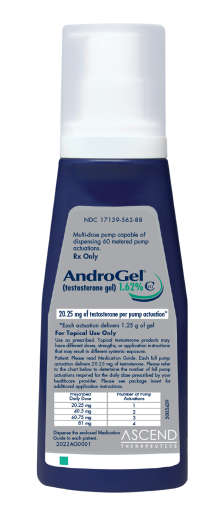
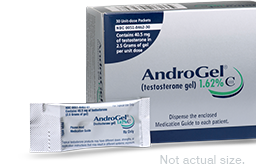
- AndroGel® (testosterone gel) is indicated for replacement therapy in adult males for conditions associated with a deficiency or absence of endogenous testosterone: Primary Hypogonadism or Hypogonadotropic Hypogonadism.
IMPORTANT SAFETY INFORMATION
WARNING: SECONDARY EXPOSURE TO TESTOSTERONE
- Virilization has been reported in children who were secondarily exposed to testosterone gel.
- Children should avoid contact with any unwashed or unclothed application sites in men using testosterone gel.
- Healthcare providers should advise patients to strictly adhere to recommended instructions for use.
- AndroGel is contraindicated: in men with breast cancer or known or suspected prostate cancer; in women who are pregnant, may become pregnant, or are breastfeeding as testosterone may cause fetal harm; or in men with known hypersensitivity to any of the ingredients in AndroGel, including alcohol and soy products.
- Patients with benign prostatic hyperplasia (BPH) treated with androgens are at increased risk for worsening signs and symptoms of BPH.
- Patients treated with androgens may be at increased risk for prostate cancer.
- Strict adherence to the following precautions is advised in order to minimize the potential for secondary exposure to testosterone from AndroGel-treated skin:
| - | Children and women should avoid contact with unwashed or unclothed application site(s) of men using testosterone gel. |
| - | Patients should wash their hands with soap and water after application. |
| - | Cover the application site with clothing after the gel has dried. |
| - | Wash the application site thoroughly with soap and water prior to any situation where skin-to-skin-contact of the application site with another person is anticipated. |
| - | Do not apply AndroGel to the genitals. |
- Signs of virilization in children and women and the possibility of secondary exposure to testosterone gel should be brought to the attention of the healthcare provider. Testosterone gel should be promptly discontinued until the cause of the virilization is identified.
- AndroGel is not indicated for use in women.
- Treatment with androgens may lead to: azoospermia; edema in patients with preexisting cardiac, renal or hepatic disease; gynecomastia; sleep apnea in those with risk factors; changes in insulin sensitivity or glycemic control; and changes in anticoagulant activity.
- Monitor serum testosterone, prostate-specific antigen, hemoglobin, hematocrit, liver function test, and lipid levels periodically.
- Most common adverse reactions (incidence ≥5%) are acne, application site reactions, abnormal lab tests, and prostatic disorders.
Please see full Prescribing Information including boxed warning and Medication Guide.